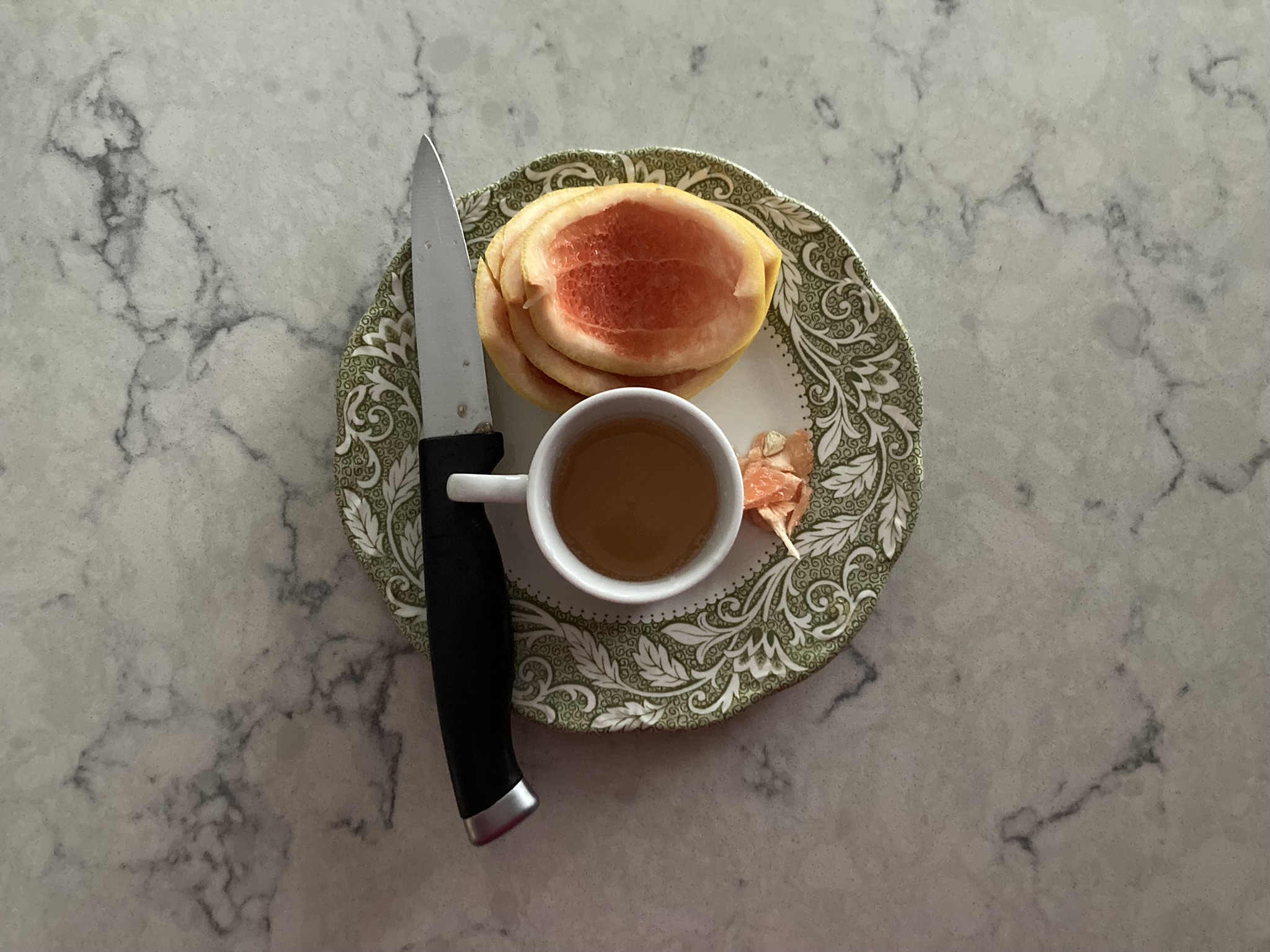
A while ago I was reading one of those books for boys, a tale of wizards & knights. Midway upon his journey our hero sat with a friend on a cart of fruit—mangoes, as I recall—& with their knives they carved the fruit to eat it. By the author's treatment of this scene I was filled with hope, imagining the ease & romance of a life fed entirely on mangoes.
So I bought mangoes & brought out my knife, the same little paring knife from the same set everyone has. Cutting into the flesh of the first fruit, all my daydreams & sweet-smelling idylls ran out on the counter just cleaned. Here was no rest, but sticky toil.
But I must be doing it wrong.
So I went back to that book for boys, & read again the passage on the carving of fruit. When I closed the book I had lost everything. My pleasant impressions were no more; instead I was incensed with the author of those words, for in all his talk of the cart full of mangoes & the taste of the mangoes & the wiping of juice from the blade, he never spoke once of the method, the craft, the techne of carving a mango. I forgave him, of course, when I recalled this was no treatise in pomospathology, but a tale of wizards & knights. But all the same, I felt the boys he wrote the book for would appreciate some pointers in form.
Well, I fetched a notebook & laid it open on the counter with the mangoes & the little paring knife & I set to work annotating the struggle of the fruit & the blade. I'd decided I would write the definitive text for any wizard or knight on the ergonomical carving of mangoes.
This is not that text.
That text—with its introduction & bibliography, its manuscript illuminations, its critical apparatus—I have wisely consigned to the trash. In the last days of its composition, I happened to read in Borges that to pen vast books is an impoverishing madness, & having begun with no great stock of wealth or wit I felt I could risk nothing further. Also, I don't much care for mangoes. No, reader, this is not that text. This text is the branch bearing other fruits; this text is the branch grafted in. This text—O reader, this text!—is the apodeictic, the apotheosis of the science of carving a grapefruit.
1.
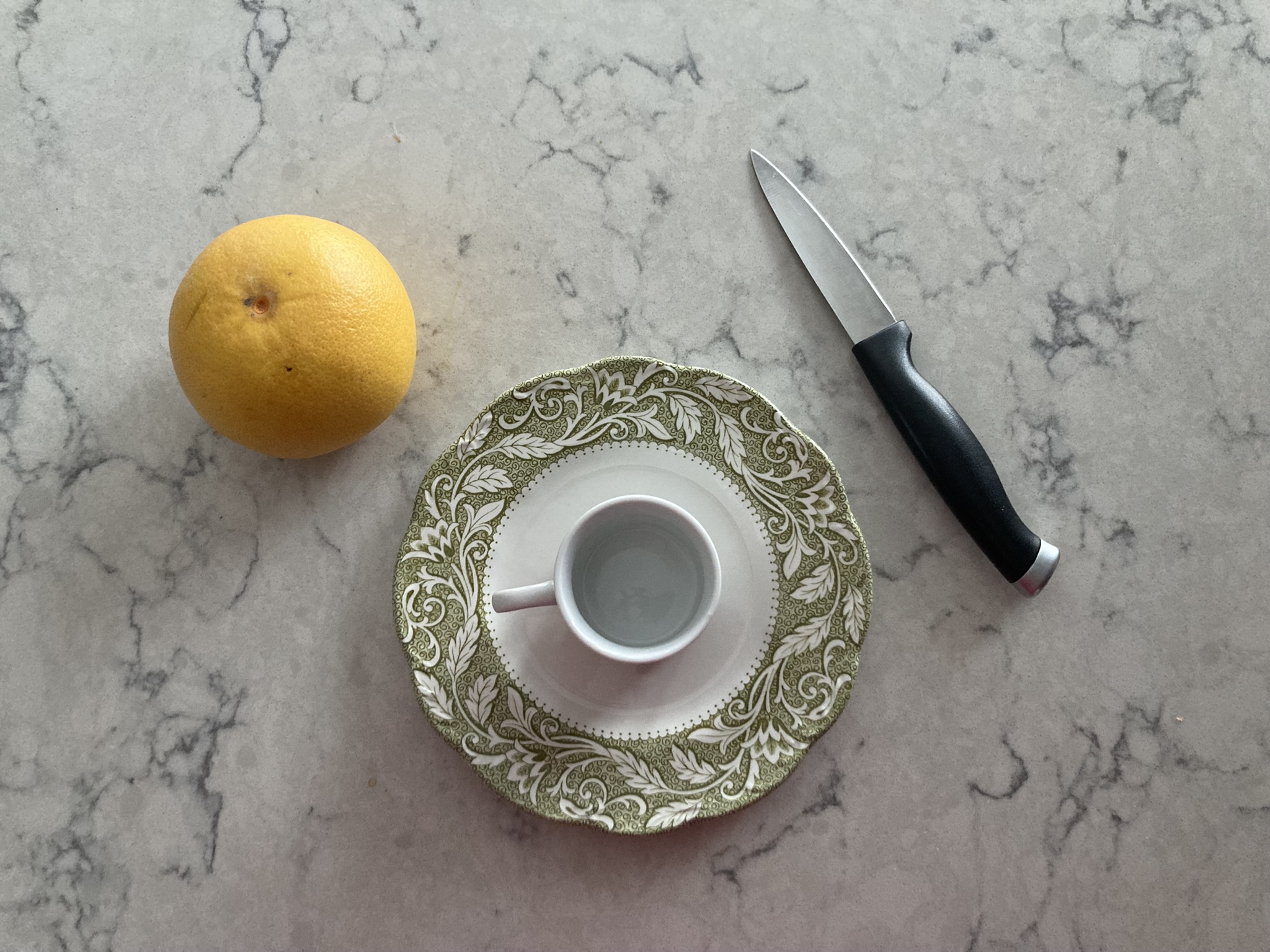
Begin with your grapefruit & your knife. Take also a plate with a raised lip & a little cup, to be placed in the center of the plate with the raised lip. These will serve to collect the juices of the grapefruit.
2.
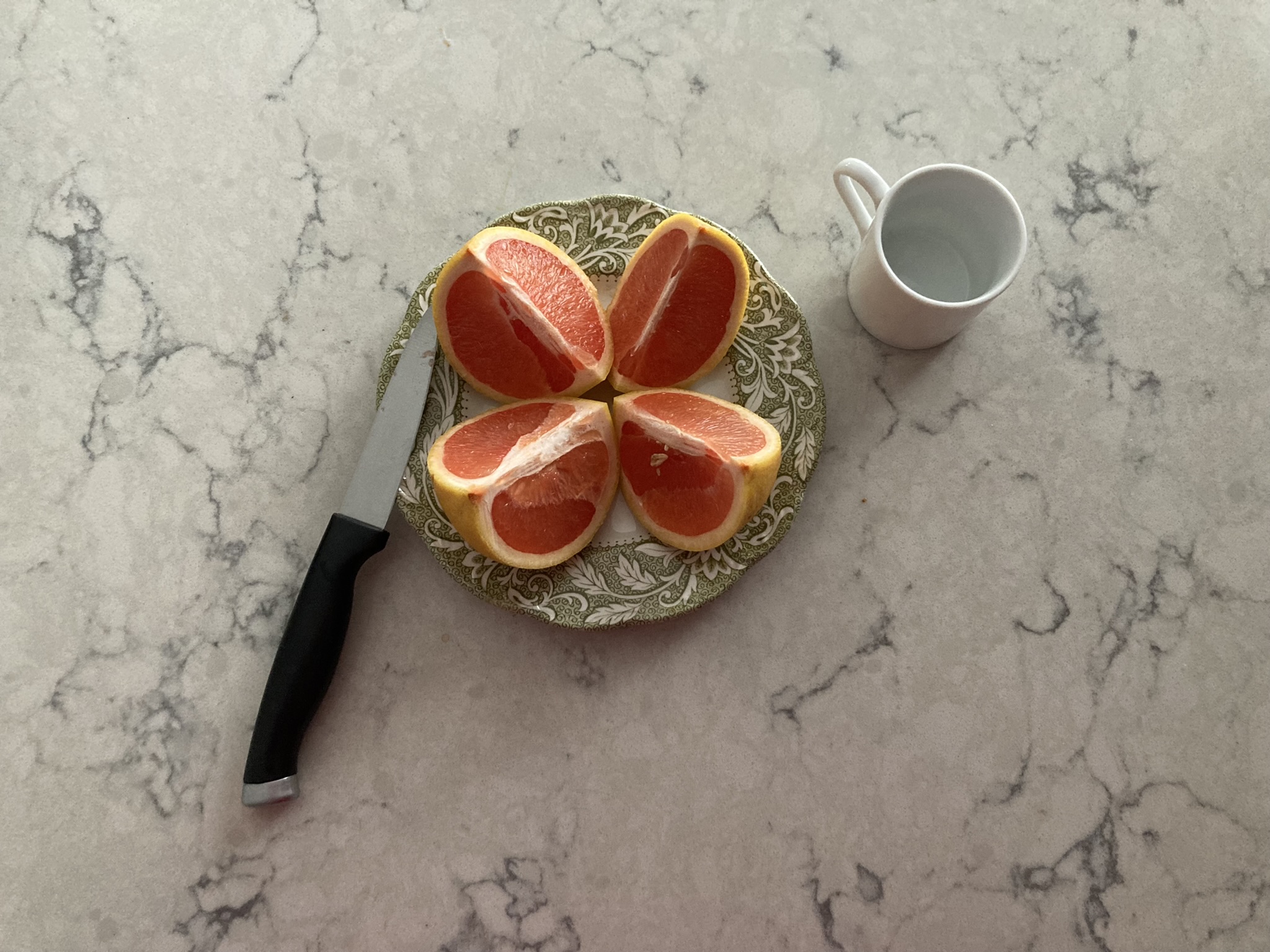
Place the grapefruit on the plate with the raised lip (the little cup being set aside) & quarter it vertically with the knife.
3.
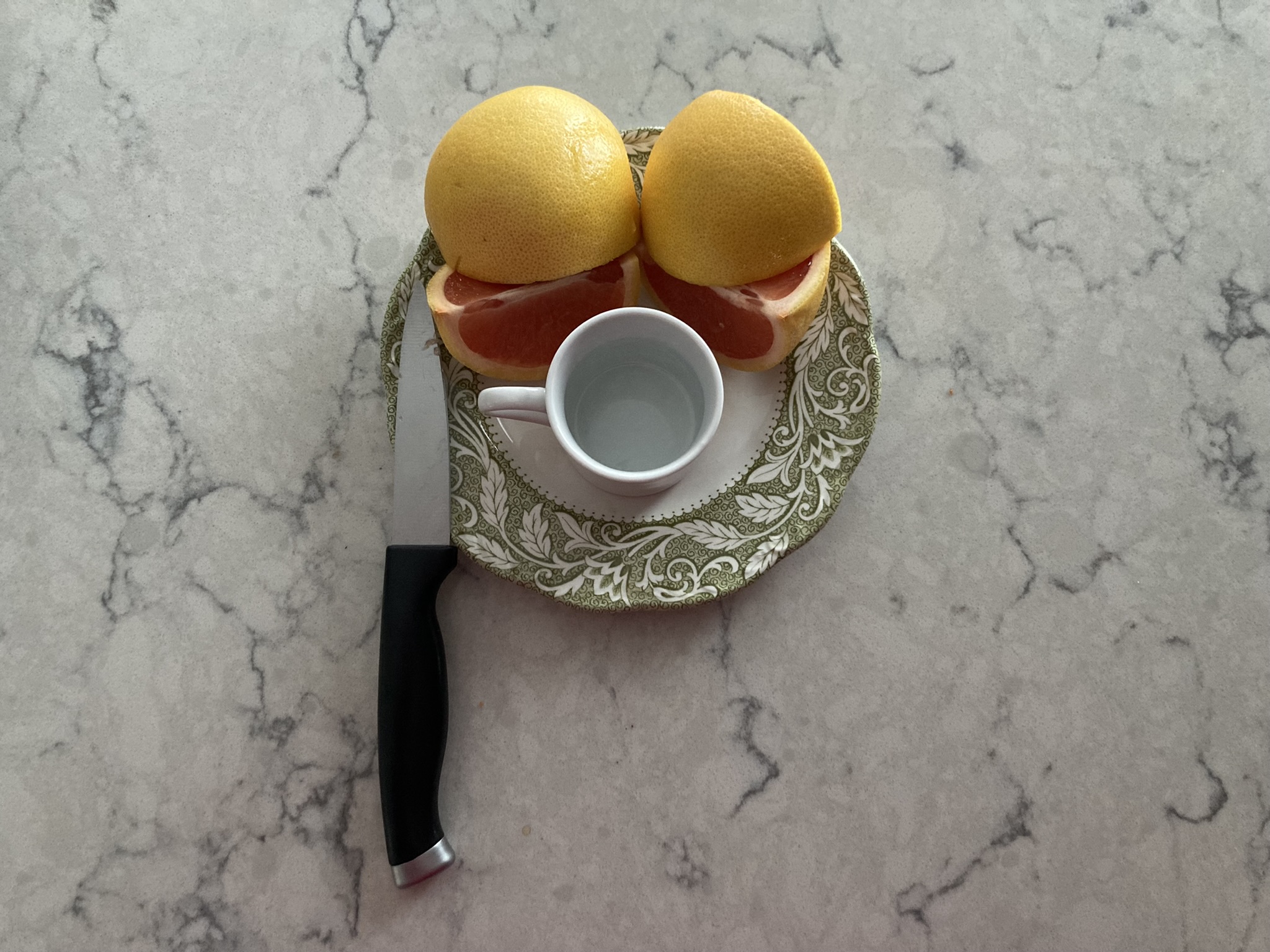
Stack the quartered grapefruit to one side of the plate with the raised lip, & place the little cup on the other.
4.
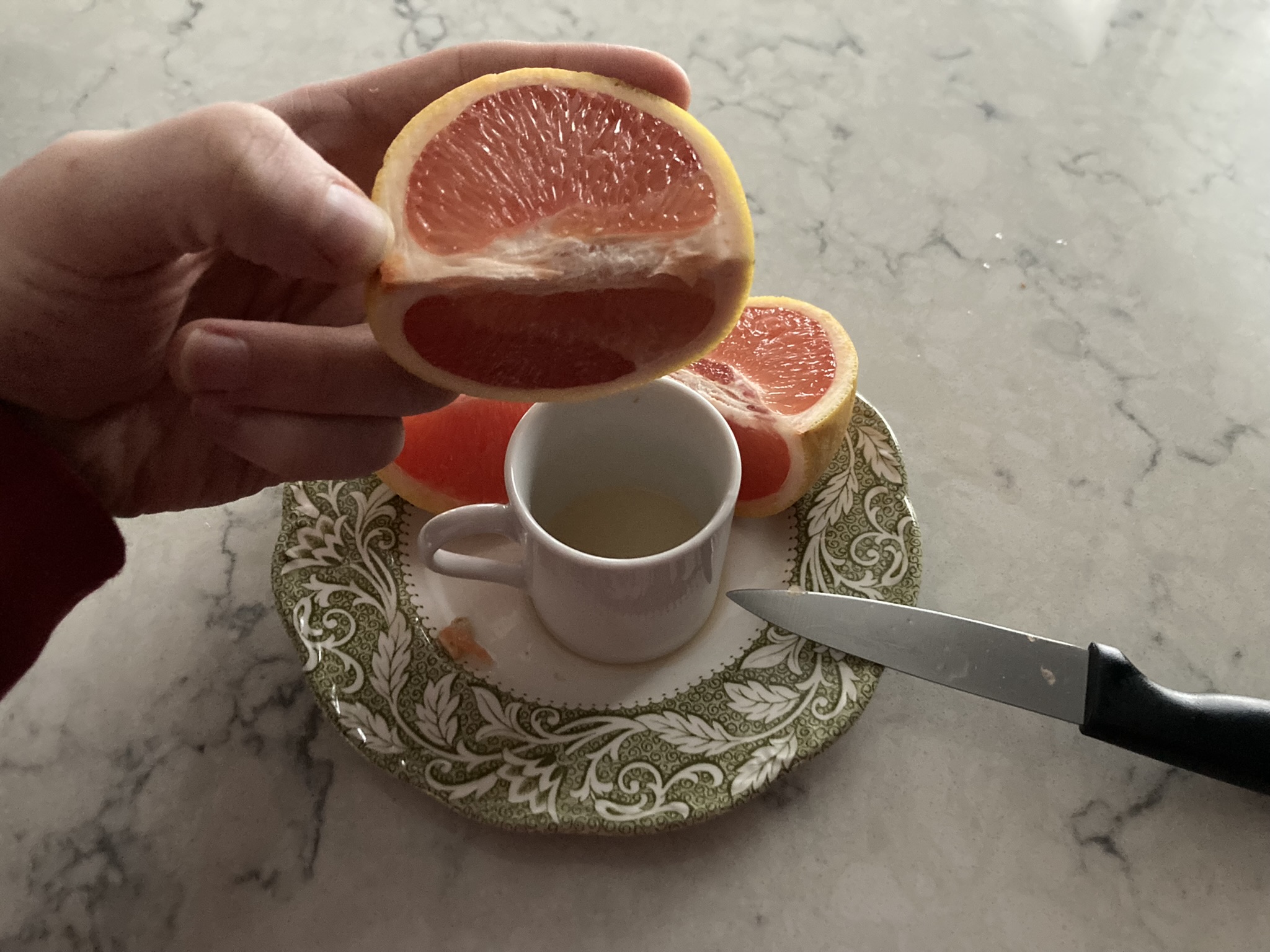
Holding one quarter of the grapefruit horizontally above the little cup, cut any albedo that clings to the central ridge.
5.
Make a semicircular cut behind the endocarp to disgorge that edible fruit. Cut close, leaving behind as little fruit & as much albedo as possible.
6.
Remove & discard any seeds, albedo, or membrane still clinging to the disgorged endocarp.
7.
Consume the disgorged endocarp.
8.
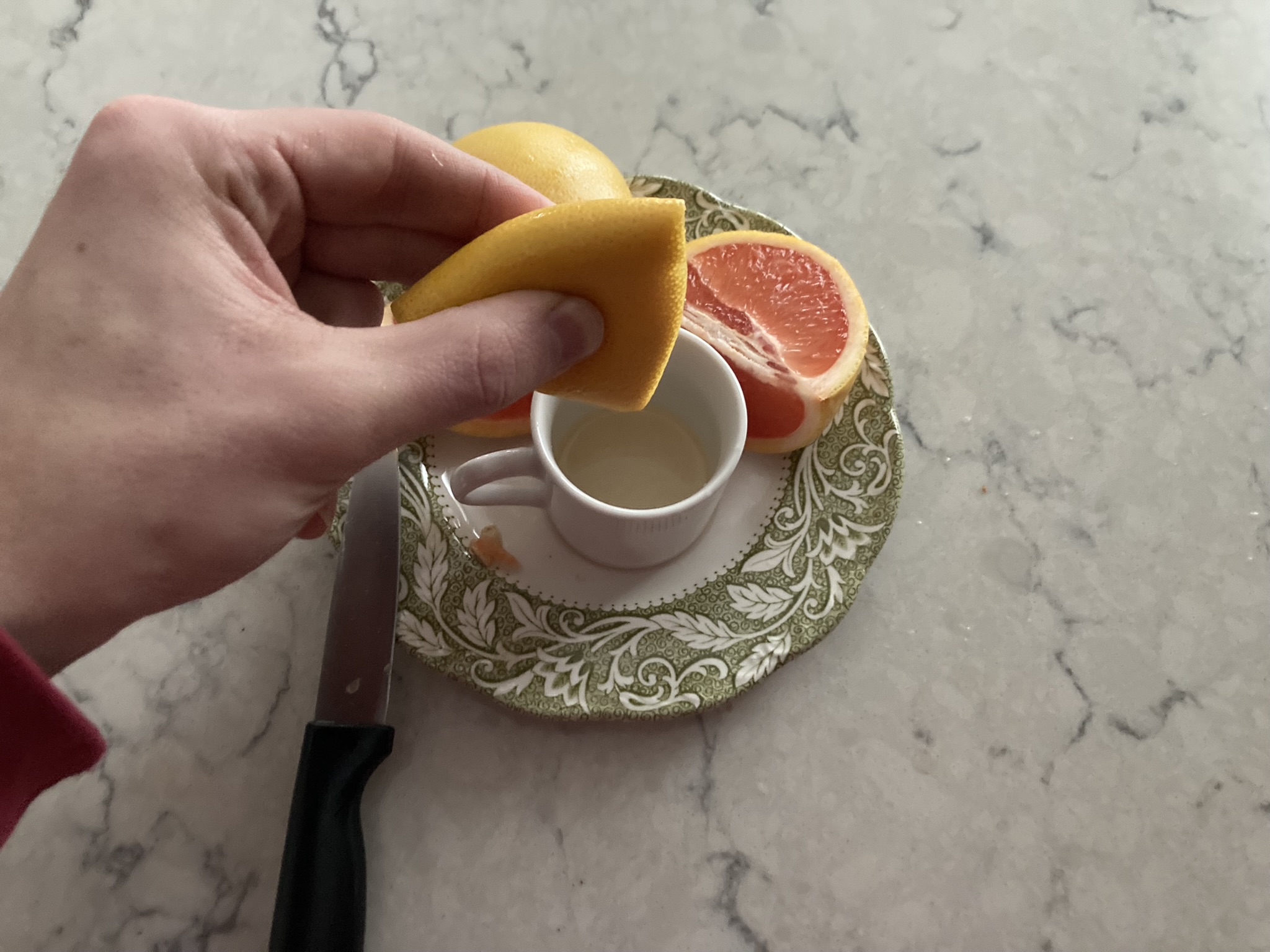
If any fruit remains attached to the flavedo, hold the excavated husk over the little cup & fold it in half vertically. Squeeze the flavedo & allow the juices to run into the little cup.
9.
Excarpate & juice the three remaining quarters of the grapefruit. You have now eaten more endocarp than ever before in your life, & have yet a fine cordial of the little cup.